
Introduction
Omega-3 fish oil has become one of the most widely recommended dietary supplements in the world—and for good reason. From supporting heart health to improving brain function, reducing inflammation, and promoting glowing skin, omega-3 fatty acids play a vital role in keeping the body functioning at its best.
But what exactly does omega-3 fish oil do for your body? How does it work at a cellular level, and who should actually take it?
In this in-depth guide, we’ll break down everything you need to know about omega-3 fish oil, backed by science but explained in simple, easy-to-understand language.
What Are Omega-3 Fatty Acids?
Omega-3s are essential fatty acids, meaning your body cannot produce them on its own—you must obtain them through food or supplements. There are three main types of omega-3 fatty acids:
1. EPA (Eicosapentaenoic Acid)
- Found primarily in fatty fish and fish oil
- Known for reducing inflammation
- Plays a major role in heart and joint health
2. DHA (Docosahexaenoic Acid)
- A structural component of the brain, eyes, and nervous system
- Essential for cognitive function, memory, and vision
- Especially important during pregnancy and aging
3. ALA (Alpha-Linolenic Acid)
- Found in plant sources like flaxseeds and walnuts
- Must be converted into EPA and DHA (conversion rate is low)
Fish oil supplements mainly provide EPA and DHA, the most bioavailable and beneficial forms.
How Omega-3 Fish Oil Works Inside Your Body
Omega-3 fish oil works at a cellular level. These fatty acids are incorporated into your cell membranes, improving their flexibility and communication ability.
Here’s what happens when you consume omega-3 regularly:
- Cell membranes become more fluid and efficient
- Inflammatory pathways are regulated
- Hormone-like compounds called eicosanoids are balanced
- Blood vessels function more smoothly
- Brain cells transmit signals more effectively
This is why omega-3 impacts so many systems in the body at once.
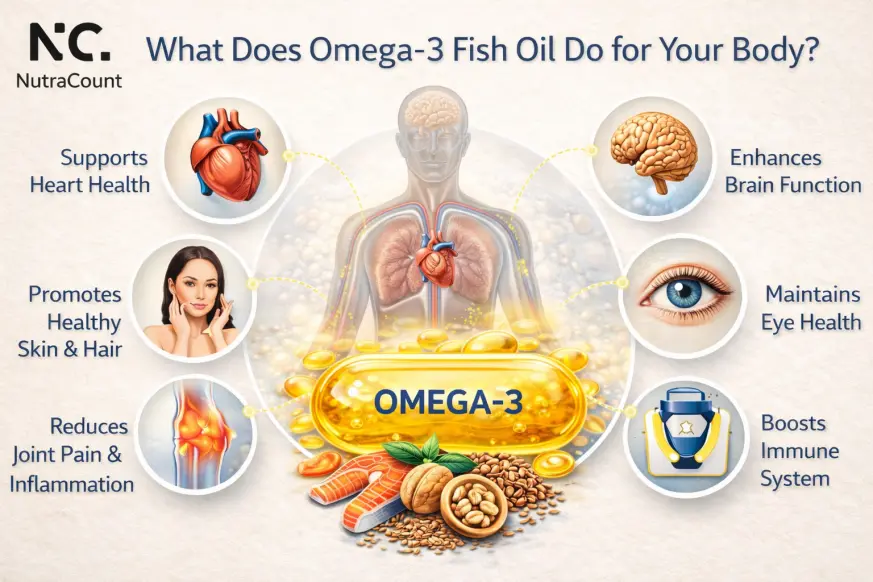
Omega-3 Fish Oil Benefits for Your Body
1. Supports Heart Health
One of the most well-known benefits of omega-3 fish oil is cardiovascular protection.
Omega-3 helps by:
- Lowering triglyceride levels
- Supporting healthy blood pressure
- Improving HDL (good cholesterol)
- Reducing arterial inflammation
- Preventing plaque buildup in arteries
Regular omega-3 intake is associated with a lower risk of heart attack, stroke, and irregular heart rhythms.
2. Boosts Brain Function and Mental Health
Your brain is nearly 60% fat, and DHA is one of its most important building blocks.
Omega-3 fish oil:
- Enhances memory and concentration
- Supports learning and cognitive performance
- Helps manage stress and anxiety
- May reduce symptoms of depression
- Slows age-related cognitive decline
DHA is also crucial during childhood development and pregnancy for proper brain formation.
3. Reduces Inflammation Naturally
Chronic inflammation is linked to conditions like arthritis, diabetes, heart disease, and autoimmune disorders.
Omega-3 fish oil:
- Lowers inflammatory markers
- Balances immune responses
- Reduces joint stiffness and pain
- Helps muscles recover faster after exercise
This makes it especially beneficial for people with joint pain, athletes, and those with inflammatory conditions.
4. Improves Joint and Bone Health
Omega-3 supports joint lubrication and flexibility, making movement smoother and less painful.
Benefits include:
- Reduced morning stiffness
- Improved joint mobility
- Lower risk of cartilage degeneration
- Support for bone density when combined with vitamin D
It’s particularly helpful for aging adults and individuals with physically demanding lifestyles.
5. Supports Eye Health
DHA is a major structural component of the retina.
Omega-3 fish oil helps:
- Maintain sharp vision
- Reduce eye dryness
- Protect against digital eye strain
- Lower risk of age-related vision problems
People who spend long hours on screens often benefit significantly from omega-3 supplementation.
6. Enhances Skin and Hair Health
Omega-3 works from within to improve skin quality and hair strength.
Skin benefits:
- Improved hydration and elasticity
- Reduced acne and redness
- Protection against premature aging
- Strengthened skin barrier
Hair benefits:
- Reduced hair fall
- Improved scalp health
- Shinier, stronger hair strands
7. Strengthens the Immune System
Omega-3 fish oil supports immune balance rather than overstimulation.
It helps by:
- Enhancing immune cell function
- Reducing excessive immune responses
- Supporting faster recovery from illness
This makes omega-3 useful year-round, especially during seasonal changes.
8. Supports Metabolism and Weight Management
While omega-3 is not a weight-loss supplement, it supports metabolic health by:
- Improving insulin sensitivity
- Reducing fat-related inflammation
- Supporting muscle recovery
- Enhancing fat utilization during exercise
It works best when combined with a balanced diet and regular physical activity.
Who Should Take Omega-3 Fish Oil?
Omega-3 fish oil is beneficial for:
- People who don’t eat fatty fish regularly
- Individuals with heart or joint concerns
- Office workers and students (brain support)
- Athletes and fitness enthusiasts
- Aging adults
- People with dry skin or eye issues
Who Should Avoid or Be Cautious?
Omega-3 is generally safe, but caution is advised for:
- People on blood-thinning medications
- Those with fish or seafood allergies
- Individuals scheduled for surgery
- People with bleeding disorders
Always consult a healthcare professional if unsure.
Recommended Omega-3 Dosage
General guidelines:
- 600–1000 mg combined EPA + DHA per day for maintenance
- 1000 mg or more for heart, joint, or inflammation support
Higher doses should only be taken under medical supervision.
Best Time to Take Omega-3 Fish Oil
- Take with meals (preferably with fat)
- Morning or evening both work
- Avoid taking on an empty stomach to reduce fishy aftertaste
Food Sources vs Supplements
| Source | EPA/DHA Content | Convenience |
| Fatty fish | High | Requires regular intake |
| Fish oil capsules | Standardized | Very convenient |
| Plant sources | Low EPA/DHA | Limited conversion |
Supplements are ideal for consistent intake.
Possible Side Effects of Omega-3 Fish Oil
Most people tolerate omega-3 well. Mild side effects may include:
- Fishy aftertaste
- Mild nausea
- Loose stools (high doses)
Choosing high-quality, purified supplements minimizes side effects.
Final Thoughts: What Does Omega-3 Fish Oil Do for Your Body?
Omega-3 fish oil plays a fundamental role in overall health. It supports your heart, brain, joints, eyes, skin, immune system, and metabolic function—all through natural, science-backed mechanisms.
When taken consistently and in the right dosage, omega-3 fish oil can significantly improve quality of life and long-term wellness.
If you’re looking for a single supplement that supports your body from head to toe, omega-3 fish oil is one of the smartest choices you can make.
FAQs About Omega-3 Fish Oil
1. What does omega-3 fish oil do for your body?
Omega-3 fish oil supports heart health, brain function, joint mobility, eye health, skin quality, and immune balance by reducing inflammation and improving cell membrane function.
2. What are the main benefits of omega-3 fish oil?
Omega-3 fish oil helps lower triglycerides, supports brain health, reduces inflammation, improves joint flexibility, enhances vision, and promotes healthy skin and hair.
3. Is omega-3 fish oil safe to take daily?
Yes, omega-3 fish oil is safe for daily use when taken within recommended limits. Long-term use supports overall health without major side effects for most people.
4. How much omega-3 fish oil should I take daily?
Most adults need 250–500 mg of combined EPA and DHA daily. For heart or joint support, up to 1000 mg may be used under medical guidance.
5. What is the best time to take omega-3 fish oil?
Omega-3 fish oil should be taken with meals, preferably those containing fat, to improve absorption and reduce digestive discomfort.
6. Is fish oil better than plant-based omega-3?
Yes, fish oil provides EPA and DHA directly, which are more effective than plant-based omega-3 that must be converted in the body.



Admin
Donec imperdiet mi quis pharetra pellentesque. Donec sapien orci, interdum vitae tortor id, tempor elementum nisi. Pellentesque eget ornare elit, quis molestie odio. Praesent blandit velit quis risus feugiat fringilla. Integer aliquet sit amet erat sit amet condimentum.