
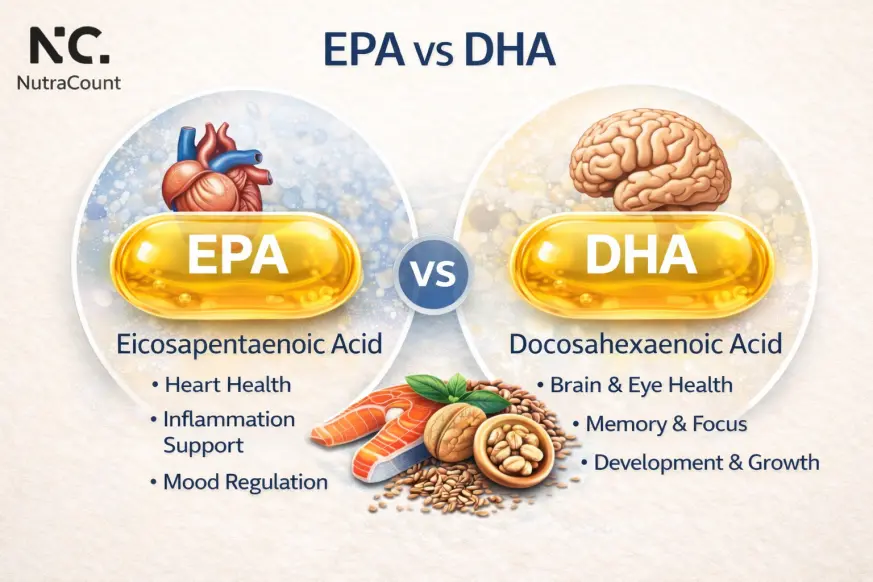
Introduction
Omega-3 fatty acids are often praised as essential nutrients for heart health, brain development, and overall wellness. But when you start reading supplement labels, you’ll quickly see two specific names repeated over and over: EPA and DHA.
Are they the same?
Is one better than the other?
What’s the best EPA to DHA ratio for your goals?
In this comprehensive, science-based guide, we’ll clearly explain the EPA vs DHA difference, their individual roles, and how to choose wisely based on your health needs.
Also Read: Top Health Benefits of Omega-3 Capsules
Omega-3 Fatty Acids Explained
Omega-3 fatty acids are a group of essential polyunsaturated fats that your body cannot produce efficiently on its own. That means you must obtain them through food or supplements.
The three main types of omega-3s are:
- ALA (Alpha-linolenic acid) – Found in plant foods like flaxseeds and walnuts
- EPA (Eicosapentaenoic Acid) – Found mainly in fatty fish and marine sources
- DHA (Docosahexaenoic Acid) – Also found in fatty fish and marine sources
While ALA is important, your body converts only a small percentage of ALA into EPA and DHA. That’s why direct intake of EPA and DHA is emphasized by health organizations such as the World Health Organization (WHO) and the National Institutes of Health (NIH).
Why EPA and DHA Are Often Confused?
EPA and DHA are both:
- Long-chain omega-3 fatty acids
- Derived mainly from marine sources
- Frequently combined in supplements
- Associated with heart and brain health
Because they often appear together on supplement labels, many people assume they perform the same functions. In reality, they have distinct biological roles.
Understanding this difference helps you:
- Choose the right supplement
- Support specific health goals
- Avoid unnecessary or imbalanced dosing
Let’s break it down clearly.
What Is EPA (Eicosapentaenoic Acid)?
Definition
EPA (Eicosapentaenoic Acid) is a long-chain omega-3 fatty acid primarily found in:
- Salmon
- Sardines
- Mackerel
- Fish oil supplements
It plays a major role in regulating inflammation and cardiovascular function.
Biological Role in the Body
EPA is primarily involved in:
- Producing anti-inflammatory signaling molecules
- Supporting healthy blood vessel function
- Regulating immune responses
- Influencing mood-related brain chemicals
Think of EPA as the “inflammation regulator” of the omega-3 family.
EPA Benefits
1. Heart Health
The American Heart Association recognizes omega-3 fatty acids as supportive of cardiovascular health. EPA helps:
- Lower triglyceride levels
- Support healthy blood flow
- Reduce inflammatory stress on blood vessels
This is why EPA-rich prescription omega-3 formulations are sometimes used under medical supervision for managing high triglycerides.
2. Inflammation Control
EPA is converted into compounds called eicosanoids and resolvins that help regulate inflammatory responses.
Chronic inflammation is linked to:
- Cardiovascular disease
- Metabolic disorders
- Autoimmune conditions
EPA acts as a balancing agent, helping prevent excessive inflammatory reactions.
3. Mood Support
Research suggests EPA may play a supportive role in:
- Depression
- Mood regulation
- Emotional stability
Some evidence indicates that higher EPA formulas may be more beneficial for mood compared to DHA-heavy formulas.
Scientific Explanation (Simplified)
EPA works by modulating cell signalling molecules that regulate inflammation. You can think of it as adjusting the “volume” on inflammatory processes — not turning them off completely, but preventing them from becoming excessive.
What Is DHA (Docosahexaenoic Acid)?
Definition
DHA (Docosahexaenoic Acid) is another long-chain omega-3 fatty acid found in:
- Fatty fish
- Fish oil
- Algae-based supplements
It is a structural fat, meaning it physically forms part of cell membranes.
Role in Brain, Eyes, and Cell Membranes
DHA is a major structural component of:
- Brain tissue
- Retina of the eyes
- Sperm cells
- Nerve cell membranes
In fact, a significant portion of the brain’s fat is DHA.
If EPA is the regulator, DHA is the architect — it builds and maintains the structure.
DHA Benefits
1. Brain Development and Function
DHA plays a critical role in:
- Memory
- Learning
- Cognitive performance
- Neuronal communication
This is why DHA is emphasized during:
- Pregnancy
- Breastfeeding
- Early childhood
2. Eye Health
The retina contains high concentrations of DHA. Adequate intake supports:
- Visual development in infants
- Maintenance of retinal function in adults
3. Pregnancy and Infant Development
Health authorities recommend DHA during pregnancy because it supports:
- Fetal brain development
- Nervous system formation
- Visual system development
DHA crosses the placenta and accumulates in the developing baby’s brain during the third trimester.
EPA vs DHA for Brain
Both support the brain — but differently:
- DHA builds brain cell structure
- EPA supports mood and inflammatory balance
EPA vs DHA: Key Differences
Structural Difference
Although both are long-chain omega-3s:
- EPA has 20 carbon atoms
- DHA has 22 carbon atoms
DHA’s slightly longer structure makes it more flexible and ideal for cell membrane integrity, especially in nerve cells.
Functional Difference
| Feature | EPA | DHA |
| Primary Role | Anti-inflammatory signaling | Structural component |
| Best Known For | Heart & inflammation support | Brain & eye development |
| Mood Support | Stronger evidence | Supportive role |
| Pregnancy Importance | Helpful | Critical |
| Triglyceride Support | Significant | Moderate |
Differences in Clinical Applications
EPA-focused formulas may be preferred for:
- High triglycerides
- Inflammatory conditions
- Mood support
DHA-focused formulas may be preferred for:
- Pregnancy
- Infant development
- Cognitive support
- Eye health
How the Body Uses Them Differently?
- EPA is rapidly used for signaling and regulation.
- DHA becomes embedded in cell membranes, especially in the brain.
In short:
EPA acts quickly. DHA builds long-term structure.
EPA and DHA for Specific Health Goals
1. EPA vs DHA for Heart Health
Both support heart health, but:
- EPA has stronger evidence for triglyceride reduction.
- Balanced formulas are typically recommended for general cardiovascular support.
2. EPA vs DHA for Brain Health
- DHA supports memory and cognition.
- EPA may support mood regulation and emotional health.
For older adults, a balanced approach is often beneficial.
3. Depression and Anxiety
Some research suggests higher EPA ratios may offer more mood-related benefits compared to DHA-heavy products. However, omega-3s should complement — not replace — professional mental health care.
4. Pregnancy
DHA is particularly important during pregnancy and breastfeeding. Many prenatal supplements emphasize DHA for fetal brain and eye development.
5. Eye Health
DHA plays a structural role in the retina. Adequate intake supports long-term eye health.
6. Inflammation
EPA is more directly involved in producing anti-inflammatory compounds. If inflammation is the primary concern, higher EPA formulas may be appropriate under medical advice.
Ideal Ratios: How Much EPA vs DHA Do You Need?
General Recommendations
Health organizations generally recommend:
- 250–500 mg combined EPA and DHA per day for healthy adults
Exact ratios are not strictly defined, but many balanced supplements use:
- 1:1 ratio
- 2:1 EPA to DHA
When Higher EPA May Be Beneficial?
- Mood support
- Triglyceride management
- Inflammatory conditions
When Higher DHA May Be Beneficial?
- Pregnancy
- Breastfeeding
- Cognitive support
- Eye health
Balanced vs Targeted Formulas
- Balanced formulas: Good for general wellness
- Targeted formulas: Designed for specific health outcomes
Choosing depends on your personal health goals.
Food Sources of EPA and DHA
Fatty Fish
Best natural sources include:
- Salmon
- Sardines
- Mackerel
- Herring
Eating fatty fish 2–3 times per week can help meet the recommended intake.
Fish Oil Supplements
Fish oil typically contains both EPA and DHA.
Check the label carefully — some products contain much less active omega-3 than the total oil amount suggests.
Algae-Based Omega-3
Algae oil provides DHA (and sometimes EPA) and is suitable for:
- Vegetarians
- Vegans
Bioavailability Differences
Triglyceride-form omega-3s and re-esterified triglyceride forms are generally well absorbed. Consistency matters more than minor formulation differences.
Are There Side Effects or Risks?
Omega-3 fatty acids are generally considered safe when taken in recommended amounts.
Possible Mild Side Effects
- Fishy aftertaste
- Mild digestive discomfort
- Nausea
Safe Upper Limits
Higher doses (especially above 3,000 mg/day combined EPA and DHA) should be taken only under medical supervision.
Blood Thinning Considerations
Omega-3s may have mild blood-thinning effects.
Consult a healthcare professional if you:
- Take anticoagulants
- Have bleeding disorders
- Are preparing for surgery
Conclusion: Clear Takeaway
When it comes to EPA vs DHA, the key difference lies in function:
- EPA = Inflammation and heart support
- DHA = Brain, eye, and structural support
Rather than asking which is better, the better question is:
What does your body need right now?
Practical Advice for Choosing Supplements
- Define your goal (heart, brain, pregnancy, mood).
- Check actual EPA and DHA content — not just total fish oil.
- Choose a balanced formula for general health.
- Consider algae-based options if vegetarian.
- Consult a healthcare professional for higher doses.
Understanding omega-3 fatty acids explained in simple terms empowers you to make smarter decisions for long-term health.
Your body doesn’t need more confusion — it needs the right balance.
Frequently Asked Questions
1. What is the main EPA vs DHA difference?
EPA primarily regulates inflammation, while DHA builds and maintains brain and eye structure.
2. Is EPA or DHA better?
Neither is universally better. The best choice depends on your health goal.
3. What is the best EPA to DHA ratio?
A balanced 1:1 or 2:1 EPA to DHA ratio works well for general health. Targeted formulas may vary.
4. Can I get enough from vegetarian sources?
Plant-based ALA converts poorly into EPA and DHA. Algae-based supplements are a reliable alternative.
5. Is it safe to take omega-3 daily?
Yes, in recommended amounts. Consult your doctor if you have medical conditions or take medications.


