
Introduction
Cardiovascular disease remains the leading cause of death worldwide. In India, heart disease is rising at an alarming rate — affecting people at younger ages compared to Western populations. Urban lifestyles, processed diets, chronic stress, diabetes, and hypertension are accelerating this trend.
Amid this growing crisis, one nutrient consistently stands out in cardiovascular research: omega-3 fatty acids.
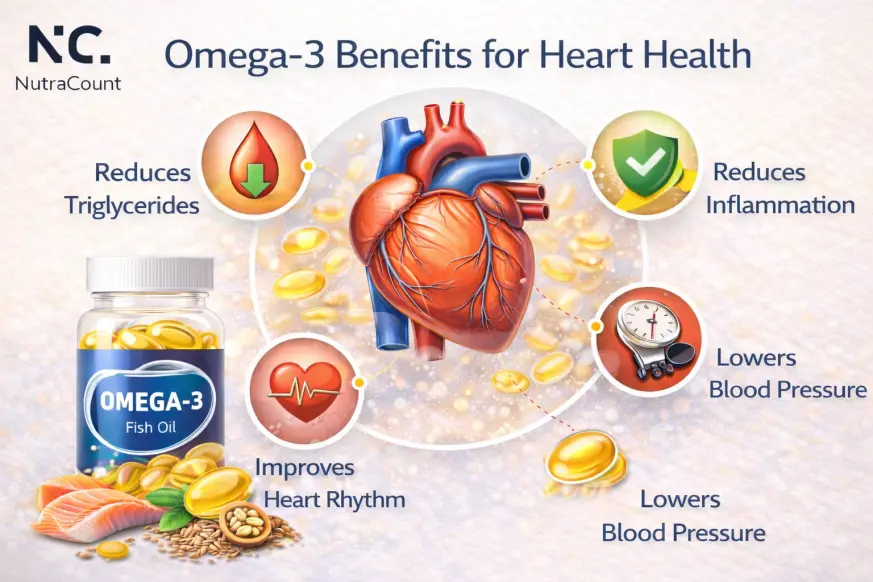
For decades, scientists have studied the relationship between omega-3 intake and heart disease risk. From lowering triglycerides to stabilizing heart rhythm, the Omega-3 benefits for heart health are backed by strong biological mechanisms and large clinical trials.
In this comprehensive, evidence-based guide, we’ll break down:
- What omega-3 fatty acids are
- How they work inside your cardiovascular system
- What research actually shows
- Who should consider supplementation
- And how to use them safely
Let’s begin with the fundamentals.
Also Read: EPA vs DHA
What Are Omega-3 Fatty Acids?
Omega-3 fatty acids are essential polyunsaturated fats. “Essential” means your body cannot produce them — you must obtain them through food or supplements.
There are three primary types:
1. ALA (Alpha-Linolenic Acid)
- Found in flaxseeds, chia seeds, walnuts, and mustard oil.
- Plant-based.
- Must be converted into EPA and DHA in the body.
- Conversion rate is very low (often less than 10%).
2. EPA (Eicosapentaenoic Acid)
- Found mainly in fatty fish.
- Strongly linked to triglyceride reduction and anti-inflammatory effects.
- Plays a key role in cardiovascular protection.
3. DHA (Docosahexaenoic Acid)
- Also found in fatty fish.
- Essential for cell membrane integrity.
- Supports heart rhythm stability and vascular function.
Marine vs Plant Sources
Plant sources provide ALA, but marine sources (fish, algae) provide preformed EPA and DHA, which are far more bioavailable.
For heart protection, EPA and DHA are considered the most clinically relevant forms.
Also Read: Top Health Benefits of Omega 3 Capsules
How Omega-3 Supports Heart Health (Science-Based Mechanisms)
The Omega-3 benefits for heart health are not based on a single pathway. These fats influence multiple cardiovascular mechanisms simultaneously.
1. Reduces Triglycerides
High triglycerides are an independent risk factor for heart disease.
Omega-3 fatty acids — especially EPA — can significantly reduce triglyceride levels. Prescription-strength omega-3 formulations are even used medically to treat very high triglycerides.
Mechanism:
- Reduce liver production of triglycerides
- Increase clearance from bloodstream
Lower triglycerides mean reduced stress on arteries and improved lipid profile balance.
2. Supports Healthy Blood Pressure
Omega-3 intake has been associated with modest reductions in systolic and diastolic blood pressure.
How it works:
- Improves arterial elasticity
- Enhances nitric oxide production
- Reduces vascular inflammation
Even small reductions in blood pressure can significantly lower long-term cardiovascular risk.
3. Anti-Inflammatory Effects
Chronic inflammation drives atherosclerosis (plaque buildup).
EPA and DHA:
- Produce anti-inflammatory molecules (resolvins and protectins)
- Reduce inflammatory cytokines
- Lower systemic inflammatory burden
This is one of the core reasons omega-3 for cardiovascular health remains widely studied.
4. Anti-Arrhythmic Properties
Irregular heart rhythms can lead to sudden cardiac events.
DHA in particular:
- Stabilizes cardiac cell membranes
- Improves electrical signaling
- Reduces susceptibility to arrhythmias
Some early studies suggested a strong anti-arrhythmic effect, though more recent research shows benefits may depend on dose and patient population.
5. Plaque Stabilization
Unstable plaques are more dangerous than large stable ones.
Omega-3s:
- Reduce inflammation within arterial plaque
- Improve plaque stability
- Potentially reduce rupture risk
Stable plaques are less likely to cause heart attacks.
6. Improves Endothelial Function
The endothelium lines your blood vessels.
Healthy endothelial function means:
- Better blood flow
- Reduced clot formation
- Improved vascular tone
Omega-3 fatty acids enhance endothelial responsiveness, especially in people with metabolic syndrome.
Also Read: How Much Omega 3 Should You Take Daily?
Omega-3 and Major Cardiovascular Conditions
Coronary Artery Disease (CAD)
Omega-3 and heart disease research suggests that regular intake may reduce risk of coronary events, particularly in individuals with existing heart disease.
People consuming fatty fish regularly often show lower rates of fatal cardiac events.
Heart Attack Risk
Some large randomized trials have shown that purified EPA supplementation reduced major adverse cardiac events in high-risk individuals already on statins.
However, results vary depending on:
- Dose
- Formulation
- Baseline health condition
This explains why some studies show strong benefits, while others show modest effects.
Stroke
Evidence suggests omega-3 intake may modestly reduce ischemic stroke risk, though effects are less consistent compared to heart attack prevention.
Atherosclerosis
Omega-3 may slow progression of plaque formation by:
- Reducing inflammation
- Improving lipid profile
- Supporting vascular integrity
Heart Rhythm Disorders
While earlier research showed strong protective effects, more recent data indicates benefits may be more significant in specific populations rather than the general population.
Clinical Research: What Do Studies Really Say?
Over the past 30 years, numerous large trials and meta-analyses have examined fish oil heart benefits.
Here’s what the broader scientific consensus suggests:
- Moderate omega-3 intake from food is consistently associated with lower cardiovascular risk.
- High-dose purified EPA may reduce cardiovascular events in high-risk individuals.
- Benefits are more pronounced in people with high triglycerides.
- Routine low-dose supplementation in healthy individuals shows mixed results.
Why the controversy?
Differences in:
- Study design
- Dosage
- EPA vs combined EPA+DHA
- Baseline diet of participants
Current cardiovascular guidelines in many countries recommend omega-3 intake primarily for people with elevated triglycerides or established cardiovascular disease.
Also Read: What Does Omega 3 Fish Oil Do for Your Body?
Recommended Dosage for Heart Health
General Heart Maintenance
- 250–500 mg combined EPA + DHA per day
- Achievable through 2–3 servings of fatty fish weekly
Elevated Triglycerides
- 2–4 grams per day (under medical supervision)
Prevention vs Therapeutic Use
Maintenance doses support general cardiovascular health. Therapeutic doses are prescribed for:
- Severe hypertriglyceridemia
- Secondary prevention in high-risk patients
Always consult a healthcare professional before high-dose supplementation.
Best Food Sources of Omega-3
Fatty Fish (Best Sources)
- Salmon
- Sardines
- Mackerel
- Anchovies
- Tuna (in moderation)
These provide direct EPA and DHA.
Plant-Based Sources (ALA)
- Flaxseeds
- Chia seeds
- Walnuts
- Soybeans
Remember: conversion to EPA and DHA is limited.
Fortified Foods
- Omega-3 eggs
- Fortified milk
- Certain cooking oils
These can help boost intake but may not replace fatty fish.
Who Should Consider Omega-3 Supplements?
While food-first is ideal, supplements may benefit:
1. People with High Triglycerides
Strongest evidence group.
2. Individuals with Family History of Heart Disease
Preventive strategy under medical advice.
3. Vegetarians & Vegans
Algae-based DHA supplements are good alternatives.
4. Individuals Who Rarely Eat Fish
Common in many Indian households.
Potential Side Effects & Safety
Omega-3 supplements are generally safe but can cause:
- Mild gastrointestinal discomfort
- Fishy aftertaste
- Loose stools
Bleeding Risk
High doses may increase bleeding tendency, especially if combined with:
- Blood thinners
- Aspirin
- Clopidogrel
Always consult your physician if on anticoagulants.
Safe Upper Limits
Most guidelines consider up to 3 grams daily from supplements safe for the general population, unless medically supervised.
Myths vs Facts About Omega-3 and Heart Health
Myth: More omega-3 always means better heart protection.
Fact: Benefits plateau beyond certain doses.
Myth: Plant omega-3 is equal to fish omega-3.
Fact: EPA and DHA are more directly beneficial for heart health.
Myth: Fish oil prevents all heart attacks.
Fact: It reduces risk in certain groups but is not a magic shield.
Practical Tips to Maximize Heart Benefits
- Eat fatty fish twice weekly.
- Choose high-quality, third-party tested supplements.
- Pair omega-3 intake with:
- Regular exercise
- Blood pressure control
- Healthy weight management
- Balanced diet (Mediterranean-style pattern)
Omega-3 works best as part of an overall heart-healthy lifestyle.
Conclusion
The Omega-3 benefits for heart health are grounded in solid biological mechanisms and decades of cardiovascular research.
These essential fats:
- Lower triglycerides
- Support blood vessel health
- Reduce inflammation
- Help stabilize heart rhythm
However, they are not a standalone solution.
For individuals in India — where heart disease risk is rising rapidly — incorporating omega-3 into a comprehensive lifestyle approach can be a powerful preventive strategy.
The most effective approach combines:
- Regular fish intake (or quality supplementation)
- Blood pressure control
- Active lifestyle
- Balanced diet
- Routine medical screening
Omega-3 and heart disease research continues to evolve, but one message remains consistent: supporting cardiovascular health requires long-term, sustainable habits — and omega-3 plays a meaningful role in that equation.
Frequently Asked Questions (FAQ)
1. Can omega-3 reverse heart disease?
No nutrient alone reverses heart disease, but omega-3 may slow progression and reduce event risk.
2. Is fish oil good for high cholesterol?
It mainly lowers triglycerides, not LDL cholesterol significantly.
3. How long does it take to see benefits?
Triglyceride reduction may be seen within weeks. Cardiovascular risk reduction takes longer-term use.
4. Is omega-3 safe for daily use?
Yes, within recommended doses.
5. Can vegetarians get heart benefits from omega-3?
Yes, but algae-based DHA supplements are more effective than relying solely on ALA.


